Deep plane facelift
The surgical facelift of the moment · 'ponytail' and 'mini' lifts
Kris Jenner's 2025 'refresh' and a string of visibly natural celebrity results made the deep plane facelift the most-discussed surgery of 2025–26, with facelifts trending younger and nearing 80,000 a year in the US alone.
Search interest: about 450 searches a month in Singapore for “facelift” (Ahrefs, October 2026).
When the face has truly descended, surgery is the right tool and the deep plane is a sound version of it. The skill is in knowing which faces are there yet.
Reviewed against the Aesthetics International standard. Category: Surgery.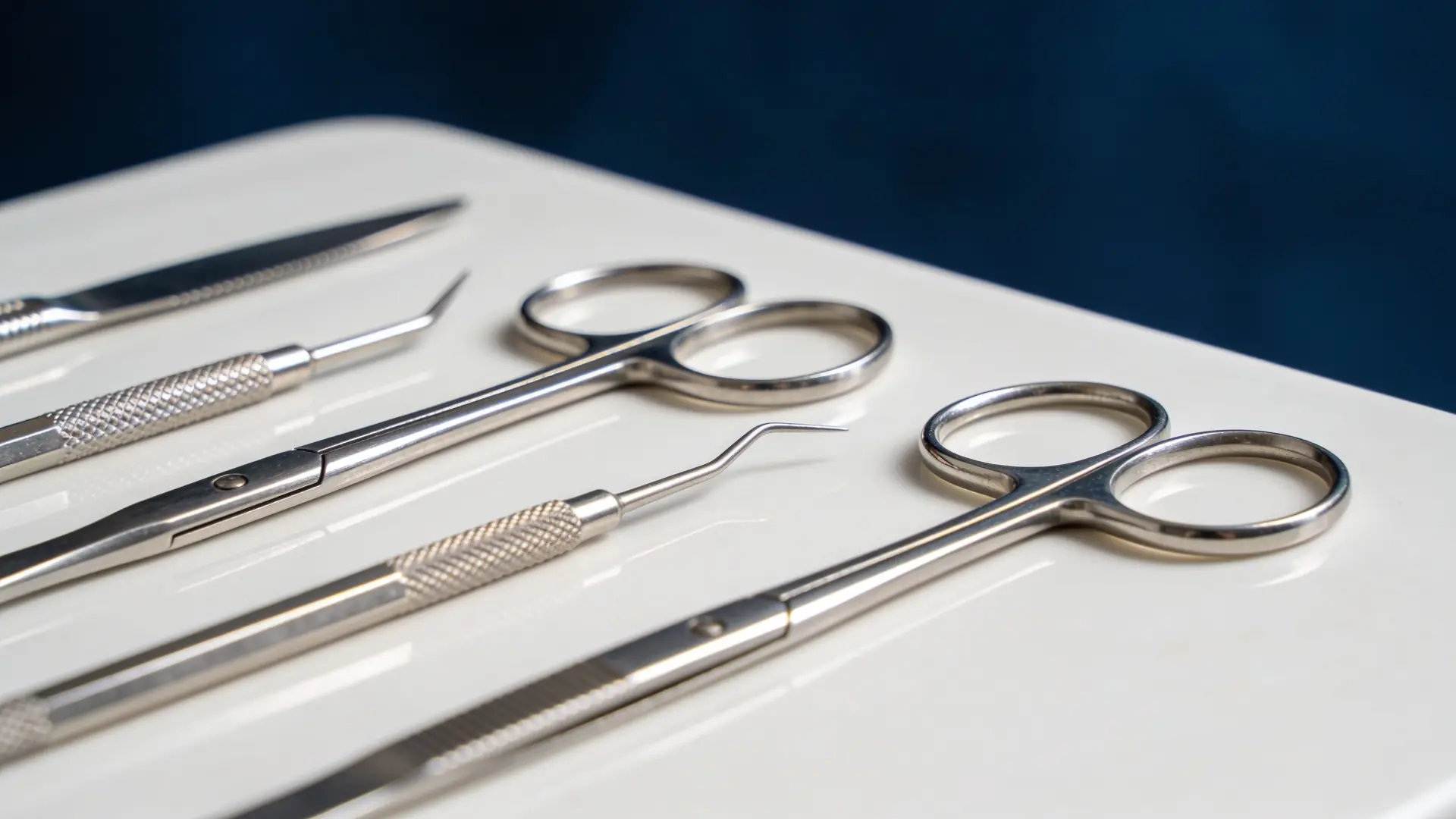
Does Deep plane facelift work?
Established. When the face has truly descended, surgery is the right tool and the deep plane is a sound version of it. The skill is in knowing which faces are there yet. A 2025 systematic review and meta-analysis of 21 studies and 2,896 patients found both deep plane and SMAS facelifts gave durable results with high satisfaction; the deep plane group reported slightly higher satisfaction and a higher overall complication rate.
- Verdict
- Established Long clinical track record. Results depend on selection and technique more than on the device.
- Evidence base
- 4 PubMed-indexed studies cited below, including systematic reviews.
- Suits
- Moderate to pronounced descent of the midface, jowls and neck in a healthy non-smoker who wants a structural reset and accepts weeks of recovery.
- Not for
- Early laxity that energy devices can manage; skin-quality, volume or pigment problems; smokers and anyone with uncontrolled medical conditions; anyone expecting it to stop ageing.
- In Singapore
- A surgical procedure performed by plastic surgeons in licensed facilities in Singapore.
- Category
- Surgery · about 450 searches a month in Singapore for “facelift”
- Reviewed
- 1 October 2026 by Aesthetics International. Revised as evidence and regulation change.
What it is
A surgical facelift that releases and repositions the SMAS — the fibromuscular layer under the skin — together with the skin as one unit, rather than pulling the skin alone or folding the SMAS on itself. 'Ponytail' and 'mini' lifts are marketing names for shorter-scar or endoscopic variants of the same family.
How it works
Through incisions around the ear and into the hairline, the surgeon enters the plane beneath the SMAS, releases the retaining ligaments that tether the cheek, jowl and neck, and moves the whole composite flap upward along the vector of youth. Because the skin is not stretched separately, the result reads as repositioned rather than tight. The release of ligaments is what makes it both more effective in the midface and more demanding, because the facial nerve branches run just beneath.
What the evidence says
A 2025 systematic review and meta-analysis of 21 studies and 2,896 patients found both deep plane and SMAS facelifts gave durable results with high satisfaction; the deep plane group reported slightly higher satisfaction and a higher overall complication rate. A meta-analysis of nerve injury after facelift and a systematic review of complications describe haematoma, temporary nerve weakness, numbness and scarring as the main risks, with rates that depend on surgeon experience. No surgery stops ageing; a facelift resets the clock, and the face continues from there.
What the studies show
- systematic review
Across 21 studies and 2,896 patients, both techniques gave durable results with high satisfaction; deep plane had slightly higher satisfaction and a higher overall complication rate.
The Deep Plane versus SMAS Facelift: A Systematic Review and Meta-Analysis. — Aesthetic Plastic Surgery, 2025. PMID 40801931.
- systematic review
Pooled facial nerve injury after facelift was uncommon and mostly temporary, with rates varying by technique and surgeon.
Facelift Surgery and Nerve Injury: A Systematic Review and Meta-Analysis. — Aesthetic Plastic Surgery, 2025. PMID 40456989.
- case series
A single-surgeon series of 600 endoscopic deep plane lifts reported durable results and a low complication rate in experienced hands.
The Ponytail Lift: 22 Years of Experience in 600 Cases of Endoscopic Deep Plane Facial Rejuvenation. — Aesthetic Surgery Journal, 2024. PMID 38152870.
- systematic review
Haematoma, nerve injury, skin necrosis and scarring were the main facelift complications, with prevention centred on technique, blood pressure control and patient selection.
A Systematic Review of Rhytidectomy Complications and Prevention Methods: Evaluating the Trends. — Annals of Plastic Surgery, 2025. PMID 40459450.
Studies are selected for relevance and quality, not for agreement with the verdict; PubMed records are linked so the reader can check them.
Who it suits
Suits
Moderate to pronounced descent of the midface, jowls and neck in a healthy non-smoker who wants a structural reset and accepts weeks of recovery.
Not for
Early laxity that energy devices can manage; skin-quality, volume or pigment problems; smokers and anyone with uncontrolled medical conditions; anyone expecting it to stop ageing.
Alternatives
The two reviewed treatments most often weighed against Deep plane facelift, on the same standard.
| Deep plane facelift | HIFU | Monopolar radiofrequency | |
|---|---|---|---|
| Verdict | Established | Vetted | Vetted |
| What it is | A surgical facelift that releases and repositions the SMAS — the fibromuscular layer under the skin — together with the skin as one unit, rather than pulling the skin alone or folding the SMAS on itself. | High-intensity focused ultrasound delivers heat to precise points at set depths — commonly 1.5, 3.0 and 4.5 mm — creating coagulation points in the dermis and the SMAS layer that contract and stimulate collagen over months. | A single large electrode delivers radiofrequency energy that travels through the tissue to a grounding pad, heating the dermis and subcutaneous layer volumetrically. |
| Evidence base | 4 PubMed-indexed studies cited below, including systematic reviews. | 3 PubMed-indexed studies cited below, including systematic reviews. | 3 PubMed-indexed studies cited below, including systematic reviews. |
| Suits | Moderate to pronounced descent of the midface, jowls and neck in a healthy non-smoker who wants a structural reset and accepts weeks of recovery. | Mild to moderate laxity with reasonable skin thickness, people who want a structural effect without injectables. | Mild to moderate laxity of the face, eyelids, neck and body; people who prefer a no-needle, no-injectable approach. |
| In one line | When the face has truly descended, surgery is the right tool and the deep plane is a sound version of it. The skill is in knowing which faces are there yet. | HIFU or radiofrequency is the wrong question — they do not do the same job, which is why 3D Facial Reconstruction uses both. | The device delivers heat; the protocol decides where it goes and in which order. That is the whole difference between tightening and lifting. |
Risks
Haematoma, temporary or rarely lasting facial nerve weakness, numbness, hairline distortion, visible scars, skin loss in smokers, and the need for revision.
In Singapore
A surgical procedure performed by plastic surgeons in licensed facilities in Singapore. Aesthetics International does not offer surgery; our VF Lift – Vertical Facelift and 3D Facial Reconstruction are non-surgical protocols for earlier descent, and we refer when surgery is the honest answer.
“When the face has truly descended, surgery is the right tool and the deep plane is a sound version of it. The skill is in knowing which faces are there yet.”
Vetted protocols on the same problem
Questions
Deep plane or SMAS facelift?
How long does a facelift last?
Can non-surgical treatments delay it?
Cite this review
Aesthetics International (2026). Deep plane facelift: does it work? Evidence, risks and verdict. https://aesthetics-international.org/treatments/deep-plane-facelift/ (reviewed 1 October 2026).
Editorial, unpaid and independent of any manufacturer. Verdict: Established. See what works and what doesn't across all 153 reviews. Spotted an error or a newer study? Suggest a correction — changes are logged on the corrections page. Terms are defined in the glossary.
Where this review is used
Have a question about this treatment?
Ask us — or ask to be matched with a practitioner in Singapore who follows evidence-based treatment. Whether it is right for you is decided at an in-person assessment, not by a review; sometimes the answer is a different treatment, or none.
WhatsApp +65 8023 7170Suggest a treatment to review
Physicians, manufacturers and readers can propose a treatment for review. Reviews are editorial and are not paid for.
[email protected]