TCA CROSS for ice-pick scars
chemical reconstruction of skin scars · 70% to 100% trichloroacetic acid · 'spot TCA'
'TCA CROSS' is searched a few hundred times a month in Singapore, often after someone with ice-pick scars has been quoted a course of lasers and found online that lasers struggle with exactly that scar.
Search interest: about 300 searches a month in Singapore for “tca cross” (Ahrefs, October 2026).
A drop of acid in the right pit does more than a thousand laser shots over it; the same drop in the wrong place makes a bigger pit.
Reviewed against the Aesthetics International standard. Category: Procedures.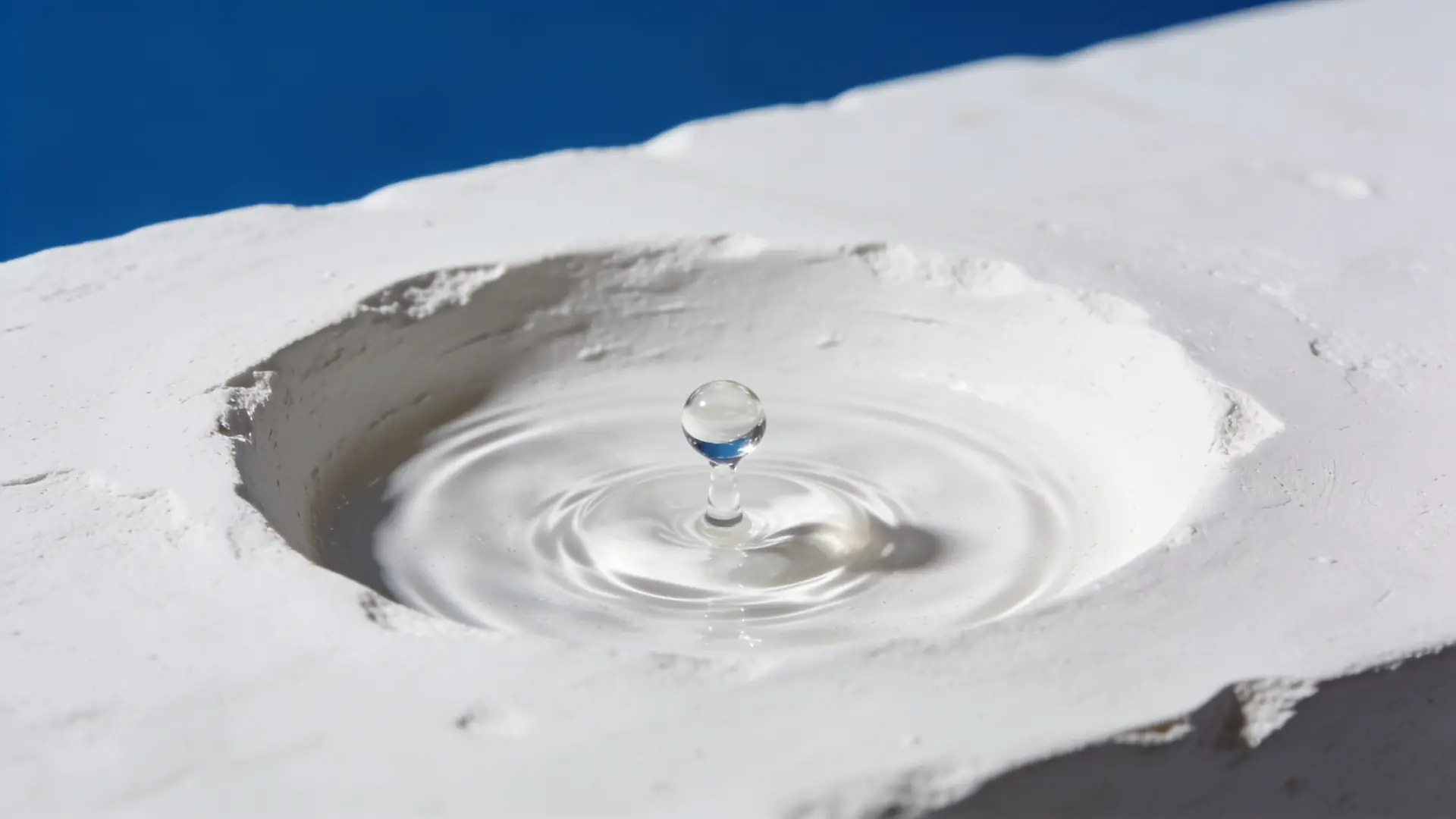
Do TCA CROSS for ice-pick scars work?
Established. A drop of acid in the right pit does more than a thousand laser shots over it; the same drop in the wrong place makes a bigger pit. Described in 2002 with 65 patients, TCA CROSS has since been supported by comparative studies, a 2017 systematic review of non-energy scar treatments and a 2025 randomised trial comparing 70 and 100 per cent concentrations, which found both effective with the higher strength giving somewhat more improvement at the cost of more pigmentary change.
- Verdict
- Established Long clinical track record. Results depend on selection and technique more than on the device.
- Evidence base
- 5 PubMed-indexed studies cited below, including systematic reviews, randomised trials.
- Suits
- Ice-pick scars and narrow deep boxcar scars, in any skin type when applied precisely by an experienced operator; people willing to repeat the treatment several times.
- Not for
- Rolling scars, wide shallow scars, active acne, keloid-prone skin, and anyone tempted by do-it-yourself acid, which widens scars and burns surrounding skin.
- In Singapore
- TCA CROSS is performed by doctors in Singapore clinics; high-strength trichloroacetic acid is not a consumer product and should not be bought online.
- Category
- Procedures · about 300 searches a month in Singapore for “tca cross”
- Reviewed
- 6 October 2026 by Aesthetics International. Revised as evidence and regulation change.
What it is
CROSS stands for chemical reconstruction of skin scars: a drop of high-strength trichloroacetic acid, 70 to 100 per cent, is placed precisely into the base of an ice-pick or narrow boxcar scar with a fine applicator. The acid injures the lining of the scar pit, which heals by laying down collagen and gradually fills from below. Surrounding skin is spared.
How it works
Each scar is treated individually; the skin frosts white within seconds, scabs over a few days, and the pit shallows over the following weeks. The procedure is repeated every four to six weeks, typically three to six times. It is usually combined with subcision for rolling scars and resurfacing for texture, because few faces have only one scar type.
What the evidence says
Described in 2002 with 65 patients, TCA CROSS has since been supported by comparative studies, a 2017 systematic review of non-energy scar treatments and a 2025 randomised trial comparing 70 and 100 per cent concentrations, which found both effective with the higher strength giving somewhat more improvement at the cost of more pigmentary change. Its particular value is that ice-pick scars are too narrow and deep for fractional lasers to reach without damaging the surrounding skin.
What people are saying
Paraphrased from public discussion on TikTok, Instagram, Reddit and in the press. Not testimonials, and not about any one clinic. Reported in: reddit.com, reddit.com.
What the studies show
- case series
In 65 patients, focal application of 65% to 100% TCA into ice-pick scars produced good to excellent improvement in most, with better results at higher concentration and more sessions.
Focal treatment of acne scars with trichloroacetic acid: chemical reconstruction of skin scars method. — Dermatol Surg, 2002. PMID 12460296.
- RCT
Both concentrations improved atrophic acne scars; 100% TCA produced greater improvement with a higher rate of transient hyperpigmentation than 70%.
Comparison of 70% and 100% concentration of trichloroacetic acid peeling efficacy with chemical reconstruction of skin scars technique for atrophic acne scars. — Arch Dermatol Res, 2025. PMID 40072613.
- clinical trial
70% TCA CROSS produced measurable improvement in ice-pick and boxcar scars over repeated sessions, with post-inflammatory hyperpigmentation the main adverse effect in darker skin.
Therapeutic response of 70% trichloroacetic acid CROSS in atrophic acne scars. — Dermatol Surg, 2015. PMID 25899884.
- systematic review
Among non-energy methods, TCA CROSS and subcision have the most consistent evidence, each suited to a specific scar morphology; combination approaches outperform single techniques.
A systematic review of treatments for acne scarring. Part 1: Non-energy-based techniques. — Scars Burn Heal, 2017. PMID 29799567.
- comparative trial
For rolling scars subcision outperformed TCA CROSS, confirming that CROSS is the tool for ice-pick scars rather than for tethered ones.
Subcision versus 100% trichloroacetic acid in the treatment of rolling acne scars. — Dermatol Surg, 2011. PMID 21457391.
Studies are selected for relevance and quality, not for agreement with the verdict; PubMed records are linked so the reader can check them.
Who it suits
Suits
Ice-pick scars and narrow deep boxcar scars, in any skin type when applied precisely by an experienced operator; people willing to repeat the treatment several times.
Not for
Rolling scars, wide shallow scars, active acne, keloid-prone skin, and anyone tempted by do-it-yourself acid, which widens scars and burns surrounding skin.
Alternatives
The two reviewed treatments most often weighed against TCA CROSS for ice-pick scars, on the same standard.
| TCA CROSS for ice-pick scars | Chemical peels | Microdermabrasion | |
|---|---|---|---|
| Verdict | Established | Established | Established |
| What it is | CROSS stands for chemical reconstruction of skin scars: a drop of high-strength trichloroacetic acid, 70 to 100 per cent, is placed precisely into the base of an ice-pick or narrow boxcar scar with a fine applicator. | A controlled chemical injury to the skin that removes layers at a chosen depth and triggers regeneration. | Mechanical exfoliation using aluminium oxide crystals or a diamond-tipped wand under vacuum to abrade the outer epidermis. |
| Evidence base | 5 PubMed-indexed studies cited below, including systematic reviews, randomised trials. | 4 PubMed-indexed studies cited below, including systematic reviews. | 3 PubMed-indexed studies cited below, including randomised trials. |
| Suits | Ice-pick scars and narrow deep boxcar scars, in any skin type when applied precisely by an experienced operator; people willing to repeat the treatment several times. | Acne and post-acne marks, dullness, uneven tone and early photoageing; melasma as an adjunct to topicals; people who want a course of low-downtime treatments. | Dull, rough skin and mild photoageing in people wanting a no-downtime course; preparation before topical regimens; sensitive budgets and sensitive skin that cannot take acids. |
| In one line | A drop of acid in the right pit does more than a thousand laser shots over it; the same drop in the wrong place makes a bigger pit. | The result is written in the depth and the priming, not in the brand on the bottle. | It polishes the surface and nothing more, which is exactly the right tool on the days nothing more is wanted. |
Risks
Scabbing for a week; post-inflammatory hyperpigmentation lasting weeks to months, common in Asian skin; widening of the scar or new scarring if acid spreads; rare hypopigmentation.
In Singapore
TCA CROSS is performed by doctors in Singapore clinics; high-strength trichloroacetic acid is not a consumer product and should not be bought online. In Fitzpatrick III to V skin, concentration, pre-treatment and sun protection are chosen to limit pigmentation. It is one step in the 4D Scar Reconstruction protocol published here.
“A drop of acid in the right pit does more than a thousand laser shots over it; the same drop in the wrong place makes a bigger pit.”
Vetted protocols on the same problem
Questions
What is TCA CROSS?
Does TCA CROSS work for ice-pick scars?
How many sessions of TCA CROSS are needed?
Is TCA CROSS safe for Asian skin?
Can I do TCA CROSS at home?
TCA CROSS or laser for acne scars?
Cite this review
Aesthetics International (2026). TCA CROSS for ice-pick scars: does it work? Evidence, risks and verdict. https://aesthetics-international.org/treatments/tca-cross/ (reviewed 6 October 2026).
Editorial, unpaid and independent of any manufacturer. Verdict: Established. See what works and what doesn't across all 153 reviews. Spotted an error or a newer study? Suggest a correction — changes are logged on the corrections page. Terms are defined in the glossary.
Where this review is used
Have a question about this treatment?
Ask us — or ask to be matched with a practitioner in Singapore who follows evidence-based treatment. Whether it is right for you is decided at an in-person assessment, not by a review; sometimes the answer is a different treatment, or none.
WhatsApp +65 8023 7170Suggest a treatment to review
Physicians, manufacturers and readers can propose a treatment for review. Reviews are editorial and are not paid for.
[email protected]