S3 Resurfacing Lift
Stack, Scan, Sculpt: multi-depth fractional CO₂ resurfacing on the DEKA SmartXide Tetra Pro, with settings adapted for darker skin types.
What is the S3 Resurfacing Lift?
The S3 Resurfacing Lift is a scar and skin resurfacing protocol developed by Dr Sin Yong in Singapore, delivered with DEKA SmartXide Tetra Pro fractional CO₂ with Pulse Shape Design, and used for ice-pick, boxcar and rolling acne scars, treatment-resistant scars previously treated elsewhere, surgical and traumatic scars and more.
Acne scar resurfacing with a fractional CO₂ laser is one of the most technically demanding procedures in aesthetic medicine. The S3 protocol treats each scar morphology on its own terms: precision point-shot ablations to individual pits first, then fractional ablation across the surrounding field, with depth varied within a single treatment area.
The method is matched to the scar, not the scar to the method. Ice-pick, boxcar and rolling scars are different structures and are treated at different depths and pulse shapes within the same session.
Resurfacing parameters do not transfer between skin types. Settings validated on lighter skin are a starting point in Asia, not an answer — the protocol is calibrated to minimise thermal spread in Fitzpatrick III–V skin.
How it is planned
Point-shot ablations stacked into individual scar pits.
Fractional ablation across the surrounding field.
Depth varied across one field so each morphology is addressed.
Where it is used
- Ice-pick, boxcar and rolling acne scars
- Treatment-resistant scars previously treated elsewhere
- Surgical and traumatic scars
- Periorbital and neck laxity (resurfacing lift)
Course and recovery
Pinpoint scabbing follows resurfacing and settles over several days; redness takes longer in some skin types. The course and the interval between sessions are planned individually and reviewed as the skin remodels. Dr Sin Yong has had the treatment himself.
What it is not
- It is not a single-pass erasure. No scar treatment removes a scar entirely.
- It is not a conventional fractional CO₂ pass. The pulse shape chosen for each scar is half the treatment.
- It is not performed on a preset.
“The laser is only half the treatment. The pulse shape chosen for each scar is the other half.”
Where it has been shared
- October 2025DEKA Tetra Pro S3 Resurfacing training, Singapore
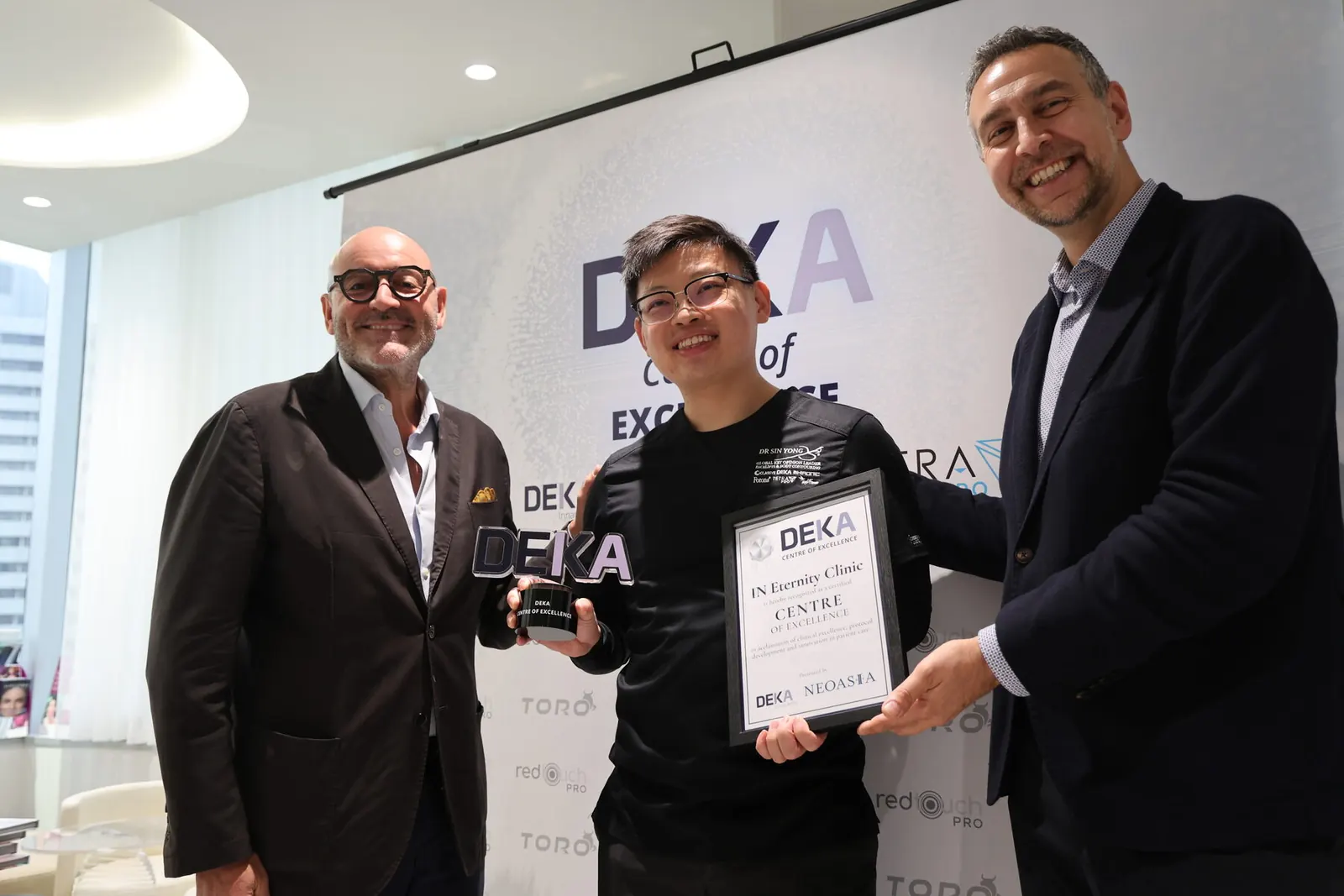
- 24 July 2026DEKA clinical exchange and Centre of Excellence certification, Singapore
Questions
What is the difference from a standard CO₂ laser?
Is it safe for darker skin?
How long is the downtime?
Related protocols
Assessment first
Whether the S3 Resurfacing Lift suits a face or a body is decided at an in-person assessment with Dr Sin Yong in Singapore. There are no packages, and the honest answer is sometimes a different protocol — or none.
WhatsApp +65 8023 7170For physicians
Dr Sin Yong shares this protocol at manufacturer academies and congresses by invitation. Faculty enquiries are handled by email.
[email protected]